
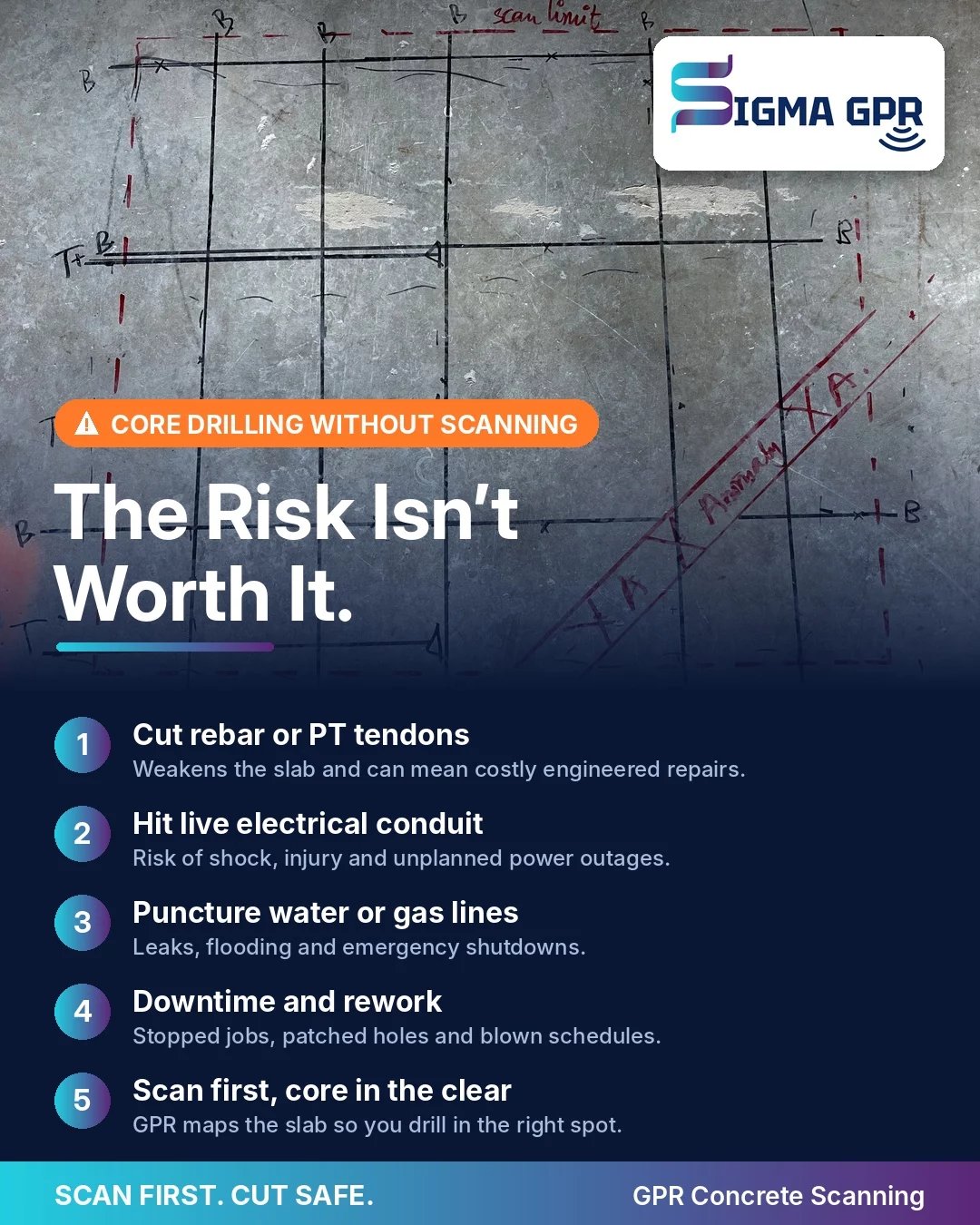
What can go wrong when you drill into concrete blind, and how a GPR scan removes the guesswork Core drilling is common work. Pipes, ducts,…
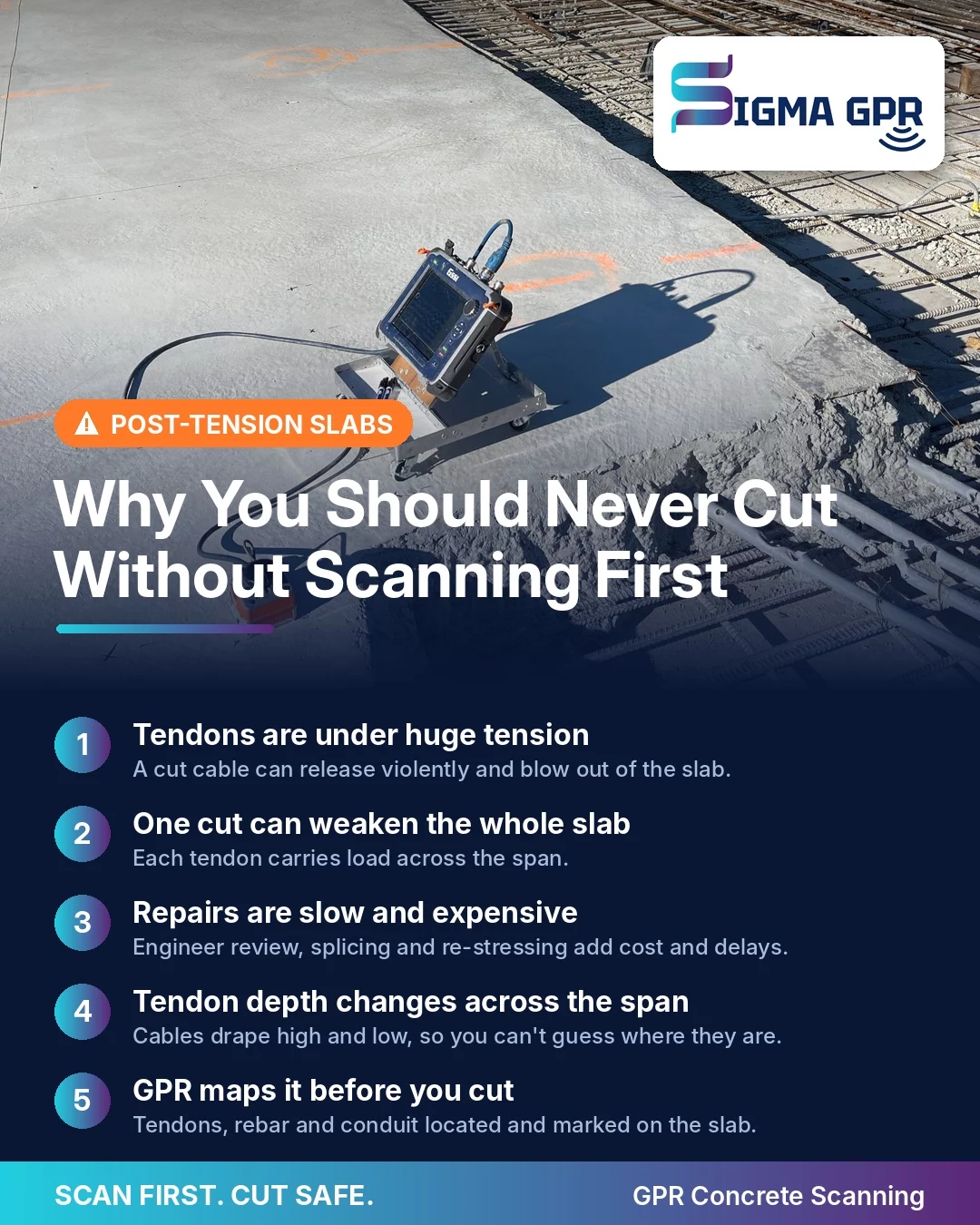
Post-Tension Slabs: Why You Should Never Cut Without Scanning First | Sigma GPR
What post-tension cables are, why they’re dangerous to hit, and how a GPR scan keeps your crew and your structure safe Of everything hidden inside…
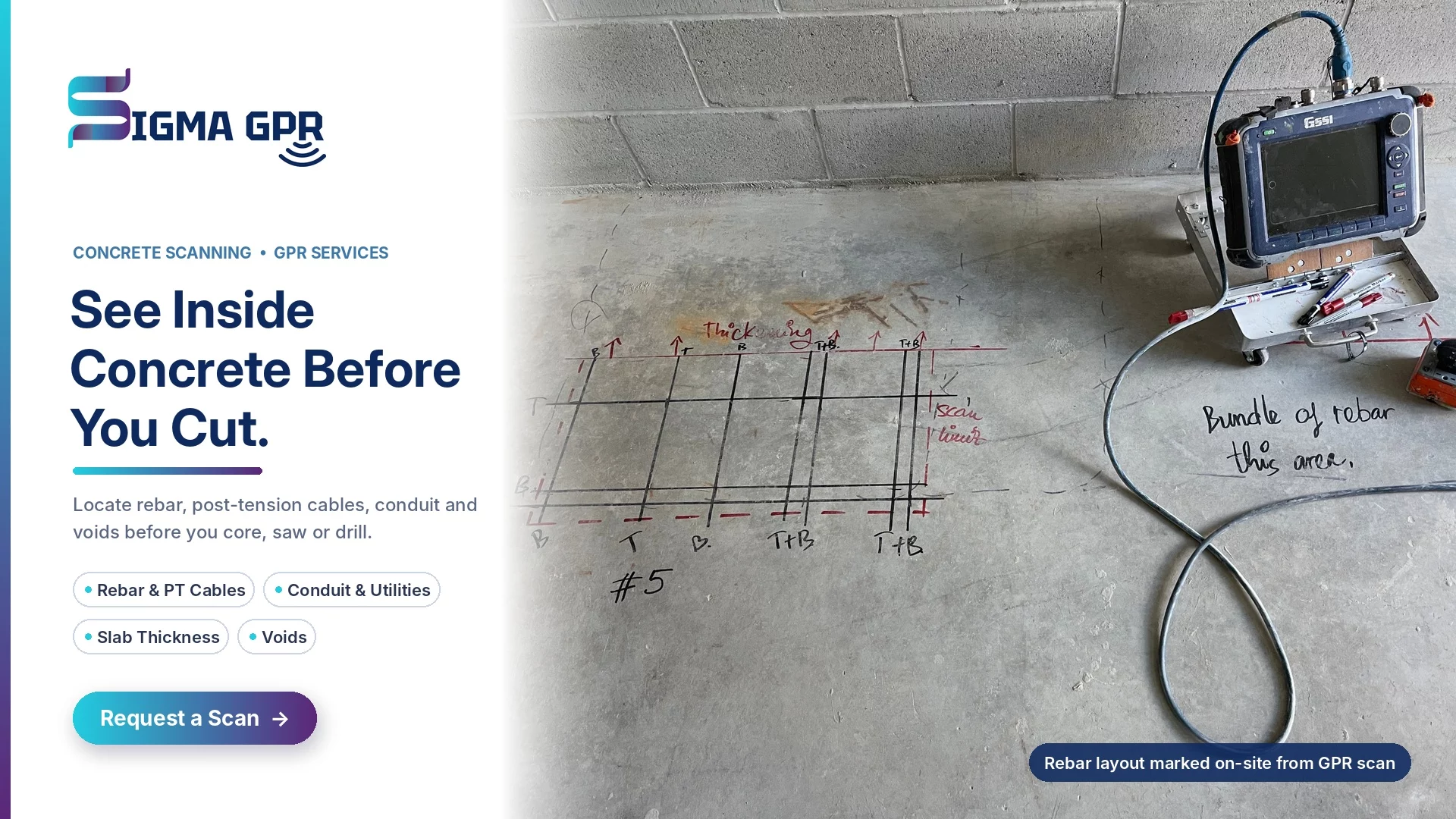
What a Concrete Scan Actually Tells You | Sigma GPR
How GPR concrete scanning works, what it finds, and how to use the results before you cut, core, or drill. Concrete looks solid and simple…
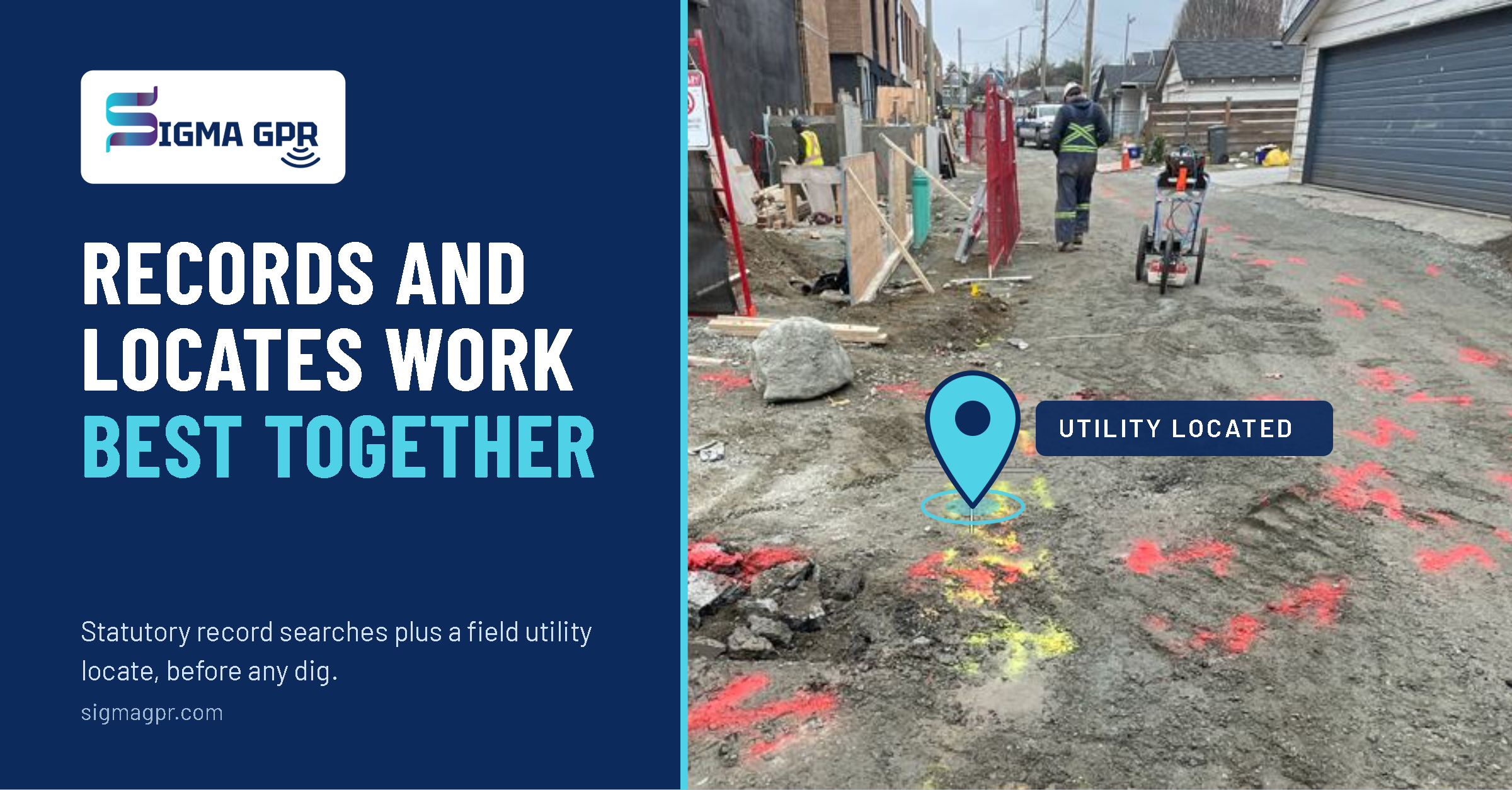
Why utility locating and statutory record searches work best together before any dig| Sigma GPR
Why BC contractors need both statutory record searches and a field utility locate before digging, and what can go wrong when either step is skipped.…
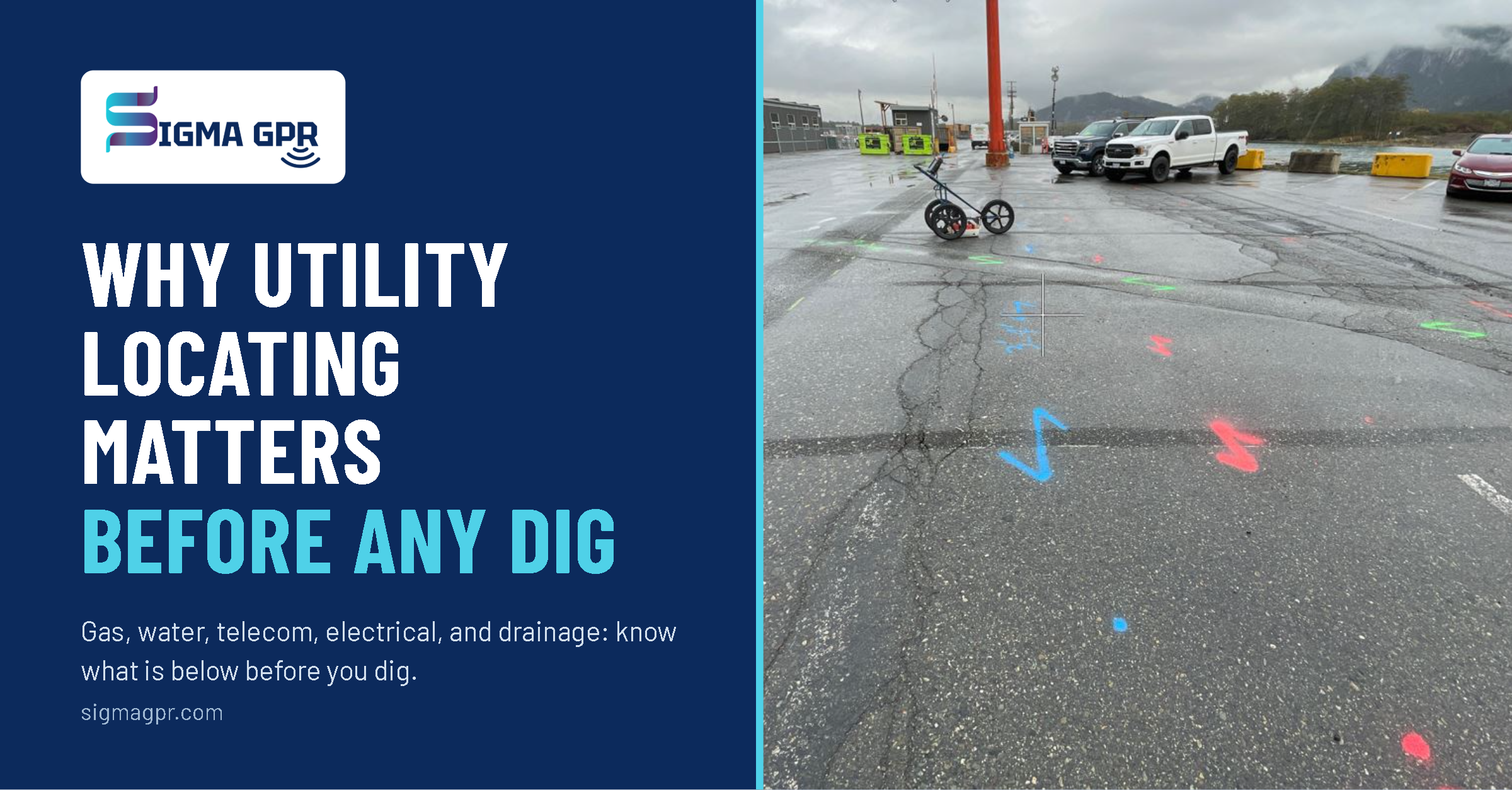
Why Utility Locating Matters Before Any Dig | Sigma GPR
Underground, it’s crowded. Gas, water, telecommunications, electrical, and drainage lines run beneath roads, yards, parking lots, and building sites, often close together and not always…
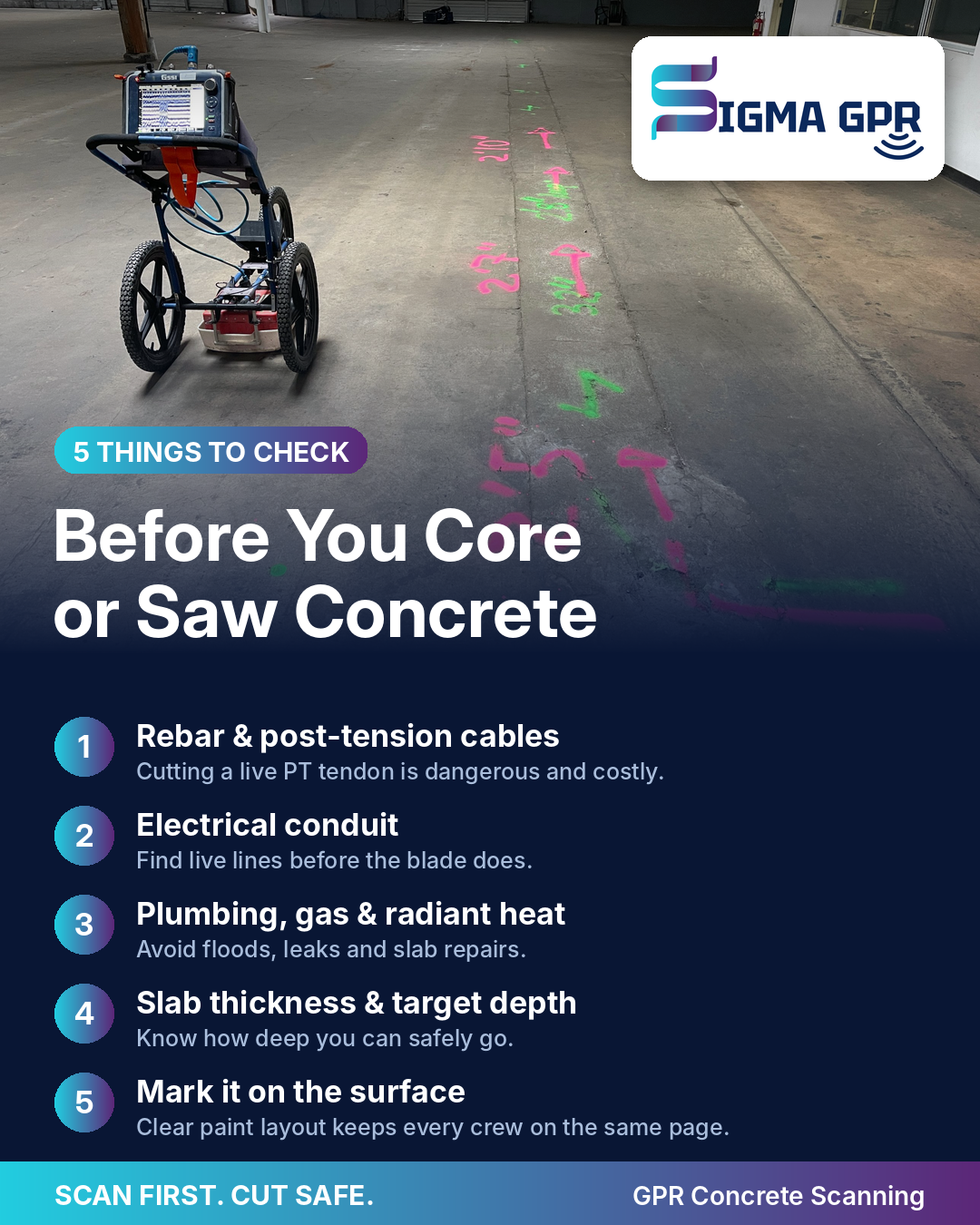
5 Things to Check Before You Core or Saw Concrete | Sigma GPR
A quick pre-work checklist for contractors in BC: how to avoid rebar, post-tension cables, and utilities before coring, sawing, or drilling concrete. Coring, sawing, and…
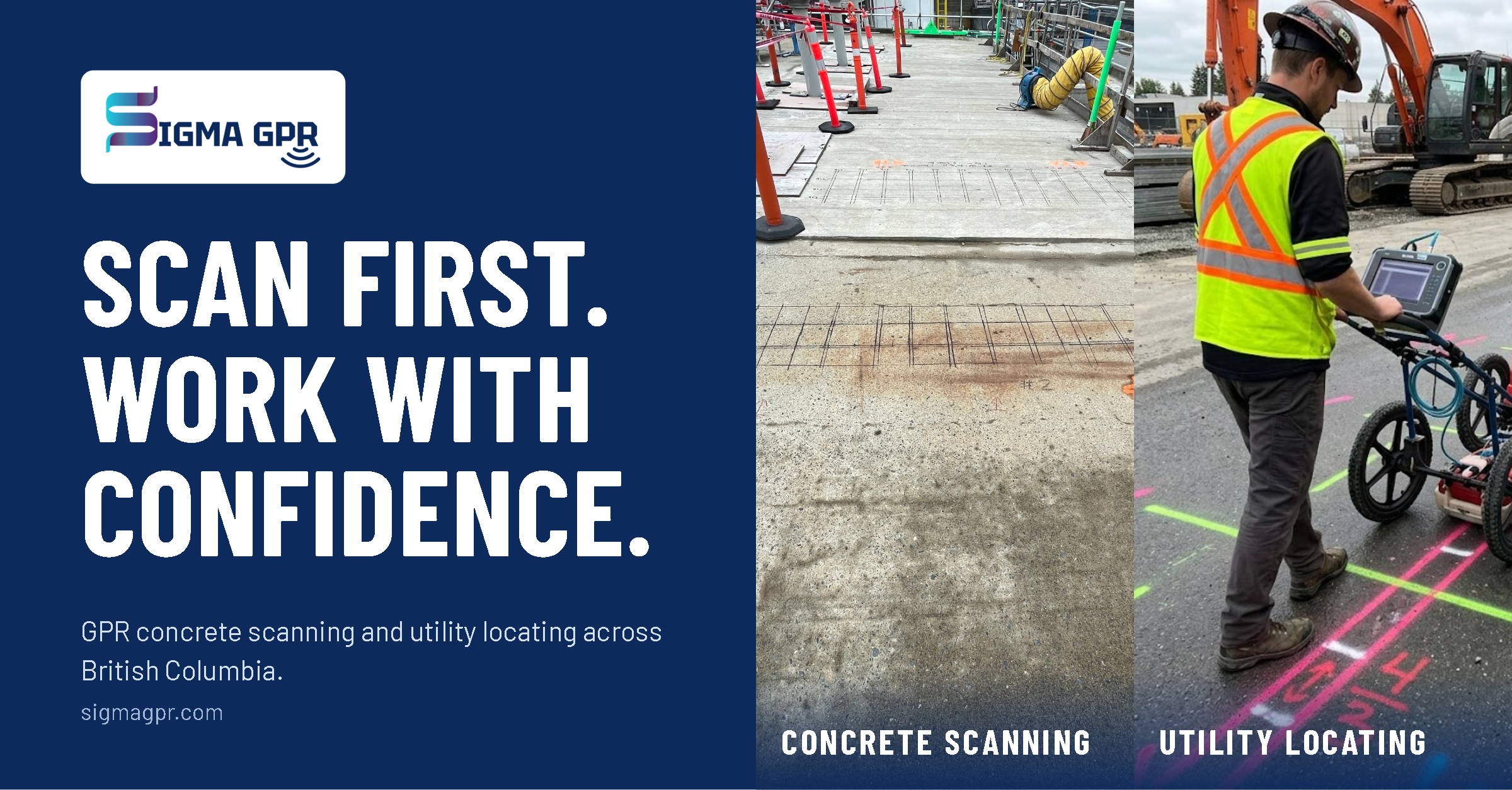
Scan First, Work with Confidence
Every construction project starts with an assumption about what lies below: under the slab, inside the wall, beneath the soil. When that assumption is wrong,…
GPR Concrete Scanning – What to expect | Sigma GPR
Deciding to scan concrete for your project was a smart decision for many reasons. It saves you time by knowing where to exactly cut, drill,…
Frequent Questions – Concrete scanning with GPR | Sigma GPR
How far can GPR go into the ground? It all depends on the kind of application you want to do with it. If you want…
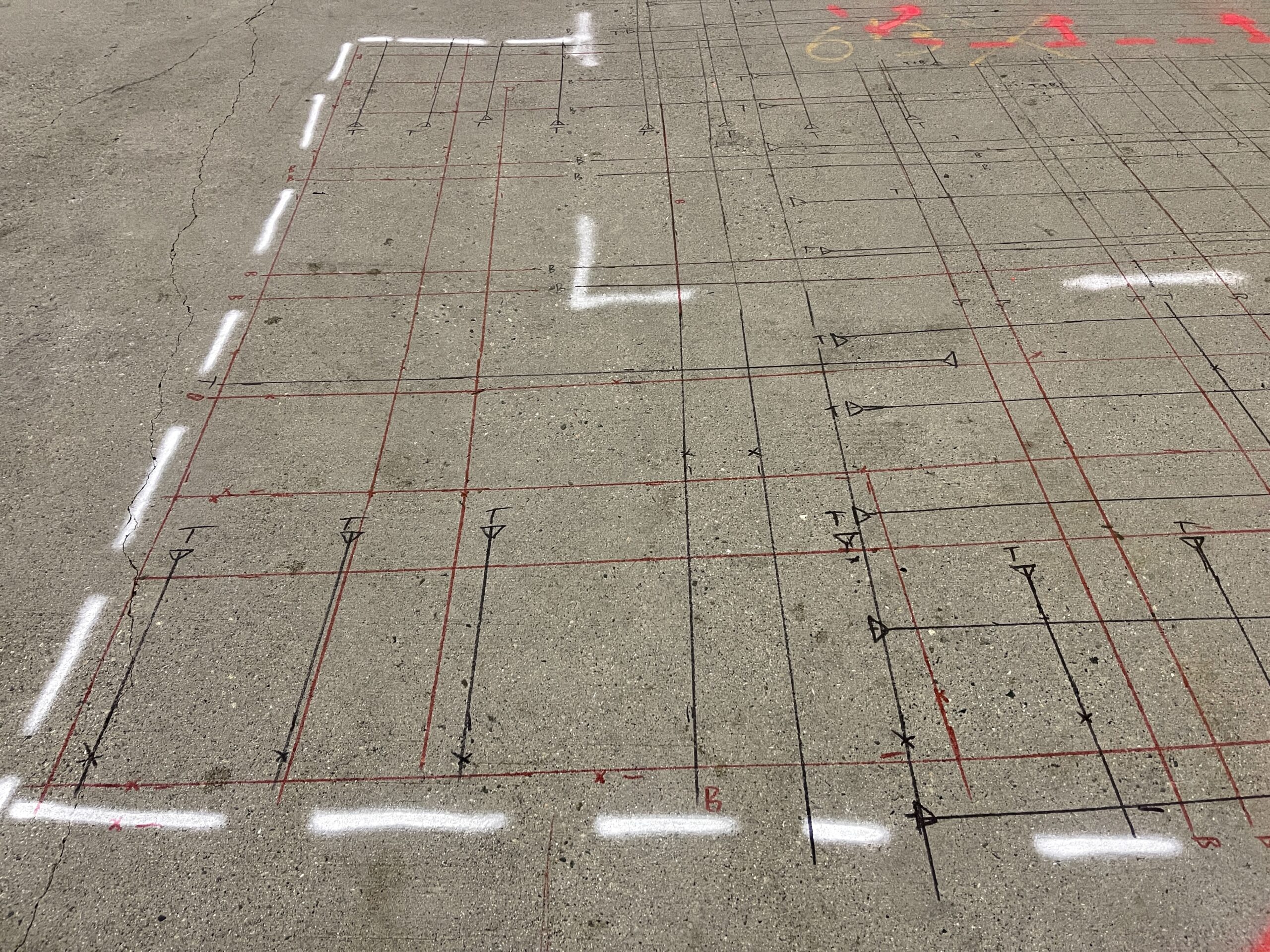
History of the Ground Penetrating Radar (GPR)
Concrete scanning with GPR has been used for a very long time now, longer than we think. Nowadays, it has become an indispensable tool for workers…