
What can go wrong when you drill into concrete blind, and how a GPR scan removes the guesswork
Core drilling is common work. Pipes, ducts, cables, and anchors all need holes through slabs and walls, and crews do it every day. Because it’s routine, it’s easy to treat it as low risk. The risk is not the drill. It’s what the drill hits on the way through.
What’s hiding in the concrete
Slabs and walls often contain items you can’t see from the surface:
- Rebar. Reinforcing steel can stop a bit, damage tools, and weaken the structure if it’s cut.
- Post-tension cables. These cables are under tension, and hitting one is a serious safety risk.
- Conduits. Electrical and other embedded conduits can cause outages and injury if struck.
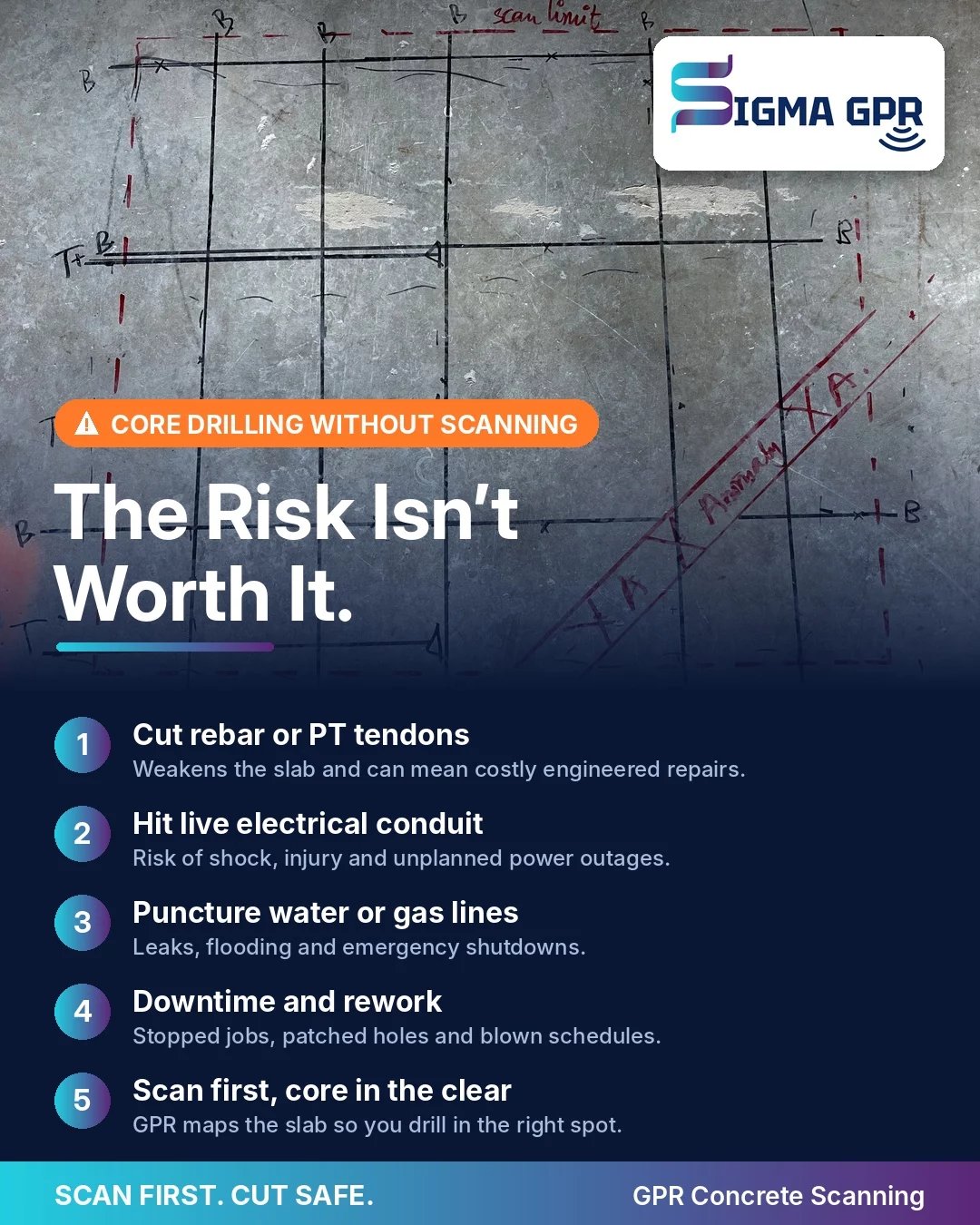
What can go wrong
- Injury. Striking a cable or live conduit can put the operator and nearby workers at risk.
- Structural damage. Cutting reinforcement or cables can affect the strength of the slab or wall.
- Service outages. A hit conduit can shut down power or communications.
- Delays and extra cost. Repairs, inspections, and engineer reviews can stop the job.
- Damaged equipment. Bits, rigs, and tools can be ruined by hitting steel.
Why “we’ll just drill and see” doesn’t work
A drill only tells you what’s there after it has already hit it. Drawings can help, but the as-built slab may not match the plans, especially on older buildings and renovations. A scan shows what’s actually in the concrete before work begins.
How a GPR scan fits into core drilling
- Share the plan. Tell the scanner where you want to drill and what you’re drilling for.
- Scan the area. A technician uses Ground Penetrating Radar to see inside the concrete without damaging it.
- Get the markings. Rebar, post-tension cables, and conduits are marked on the surface.
- Choose the location. Your crew picks hole positions that avoid the marked items.
- Drill with confidence. The work goes ahead on a plan that’s based on what’s really there.
Good habits for core drilling
- Scan before every new location, not just the first one.
- Brief everyone on site about what the markings mean.
- Keep the markings visible until the work is done.
- Re-scan if you change the hole position.
- Stop and check if something unexpected comes up while drilling.
The bottom line
A scan costs a small fraction of what a strike can cost in safety, repairs, and downtime. At Sigma GPR Services Inc., we provide GPR concrete scanning across British Columbia, so you can core, cut, and drill with confidence.
Planning to core drill in BC? Get in touch before you start.
 +1 (778) 302-0868
 [email protected]
 sigmagpr.com