
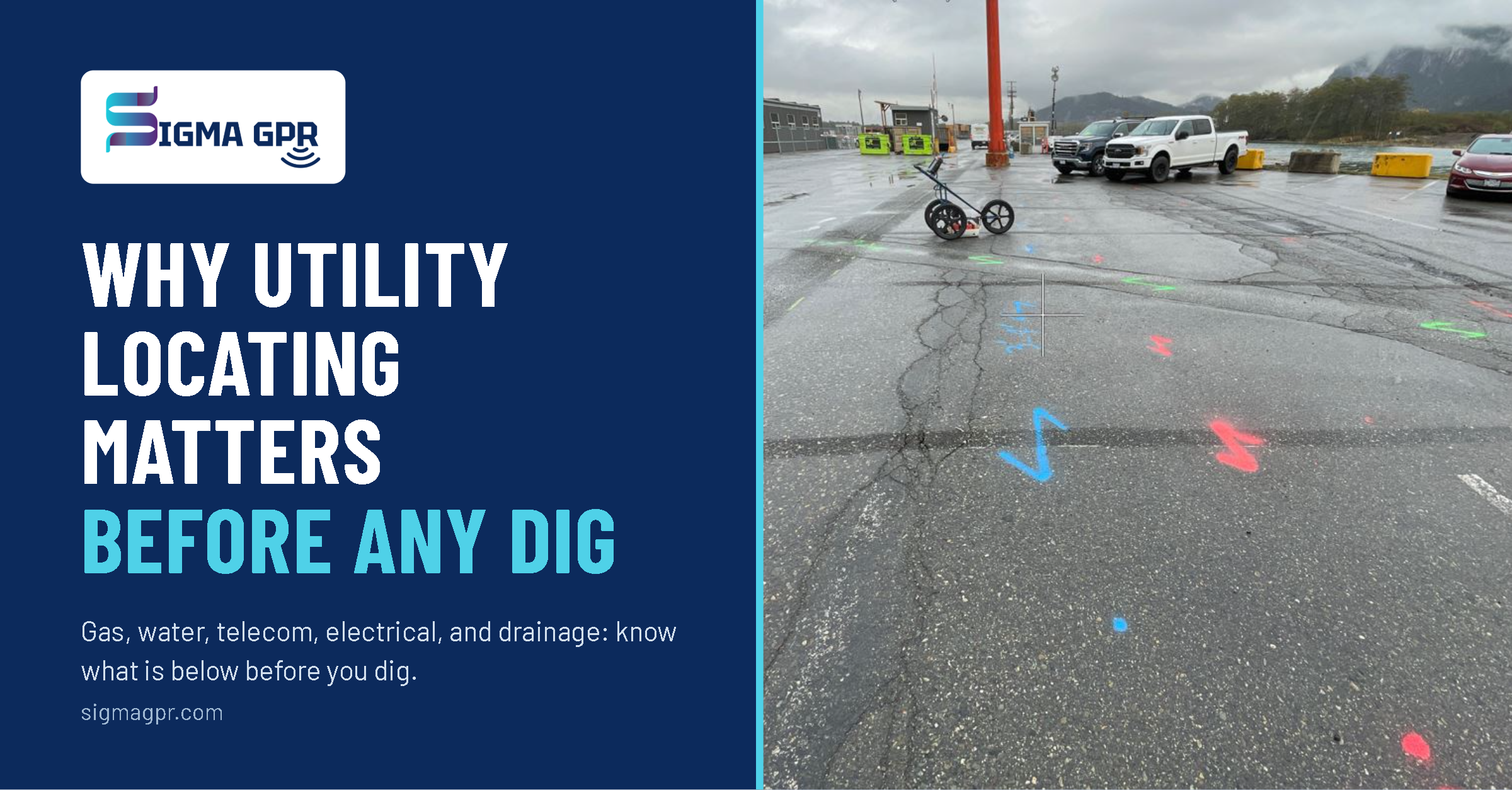
Underground, it’s crowded. Gas, water, telecommunications, electrical, and drainage lines run beneath roads, yards, parking lots, and building sites, often close together and not always where the drawings say. One strike during a dig can mean injury, an outage, a repair bill, and a stopped job. Locating utilities before any dig is one of the simplest ways to prevent all of that.
What we locate and map
Utility locating means finding, identifying, and mapping the services and routes buried below a work area. These typically include:
- Gas lines. A strike can create a serious safety hazard for your crew and the surrounding area.
- Water lines. A break can flood a site, damage property, and interrupt service.
- Telecommunications. Cutting fibre or cable can knock out phone and internet service for a whole area.
- Electrical lines. A strike can cause serious injury as well as outages and equipment damage.
- Drainage and sewer lines. Damage can cause leaks, collapses, and costly repairs.
How statutory record searches fit in
Records are the starting point. A statutory record search checks the official information held by utility owners about where their lines are believed to be. It tells you what to expect before anyone goes on site.
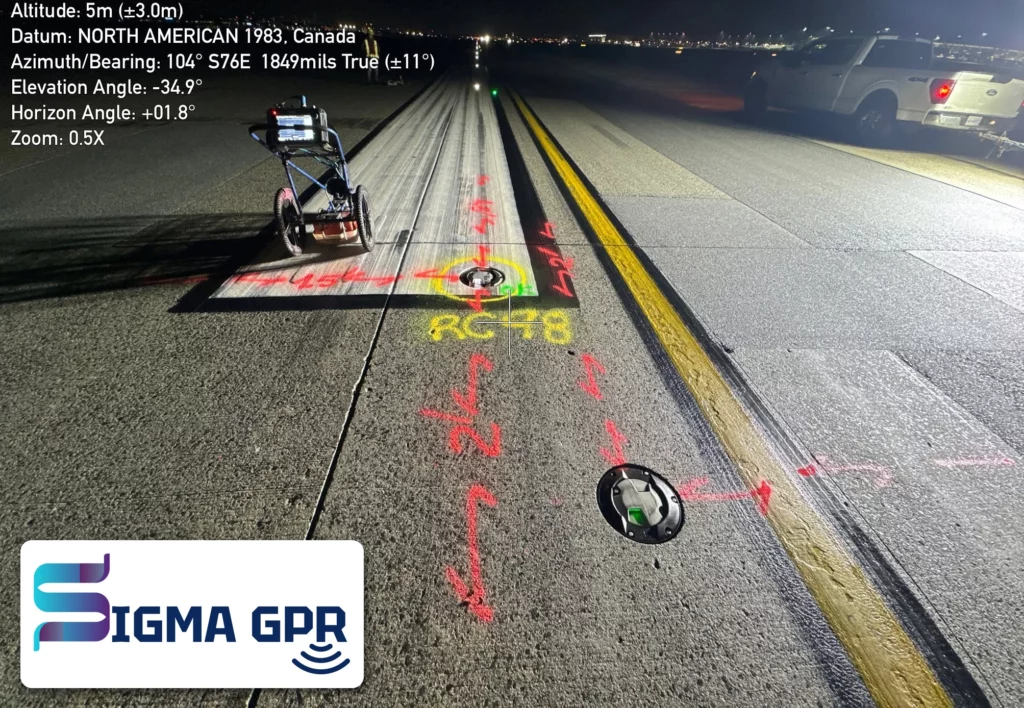
Records alone don’t tell the whole story, though. Lines can be installed, moved, or repaired without being recorded accurately, and older records may be incomplete. That’s why record searches are best combined with field work, using locating and tracing technology (including Ground Penetrating Radar) to find what is actually in the ground and mark it on the surface. Records tell you what should be there. Locating shows you what is there.
What can go wrong when you skip this step
- Injury and safety risks for your crew and the public, especially with gas and electrical lines.
- Service outages that affect neighbours, businesses, or entire areas, with you responsible for the cause.
- Repair costs and liability that can far outweigh the cost of locating beforehand.
- Project delays while lines are repaired, inspected, and cleared before work can resume.
- Damage to your reputation with clients, owners, and utility providers.
Good habits before you dig
- Request the records and follow the process required for your area. Call or contact your provincial before-you-dig service, and check what your project requires.
- Have the work area located and marked, not just researched.
- Share the markings with everyone on site and keep them visible.
- Treat the marks as a guide, and dig carefully near marked lines.
- Re-locate if the dig area changes, or if the markings fade or disappear.
The bottom line
Utility locating is a small step compared with the cost of what it prevents. At Sigma GPR Services Inc., we locate, identify, and map underground utilities across British Columbia, and we also offer statutory record searches, so you can dig with confidence.
Planning a dig in BC? Get in touch before you start.
 +1 (778) 302-0868
 [email protected]
 sigmagpr.com